Working out at home can deliver the same strength, muscle, and fitness results as a commercial gym when done correctly. Many people struggle because they lack structure, progression, or recovery focus. These ten practical tips will help you turn any corner of your home into an effective training zone that produces real, lasting change.
TABLE OF CONTENT
- Create a dedicated training space
- Apply progressive overload every week
- Centre your sessions on compound movements
- Master strict form and control
- Combine strength and cardio elements
- Warm up thoroughly and cool down
- Protect recovery and stay consistent
- Track every session and adjust smartly
- Use simple equipment or smart bodyweight progressions
- Keep sessions time-efficient and enjoyable
- Conclusion
- Frequently Asked Questions (FAQs)
1. Create a dedicated training space
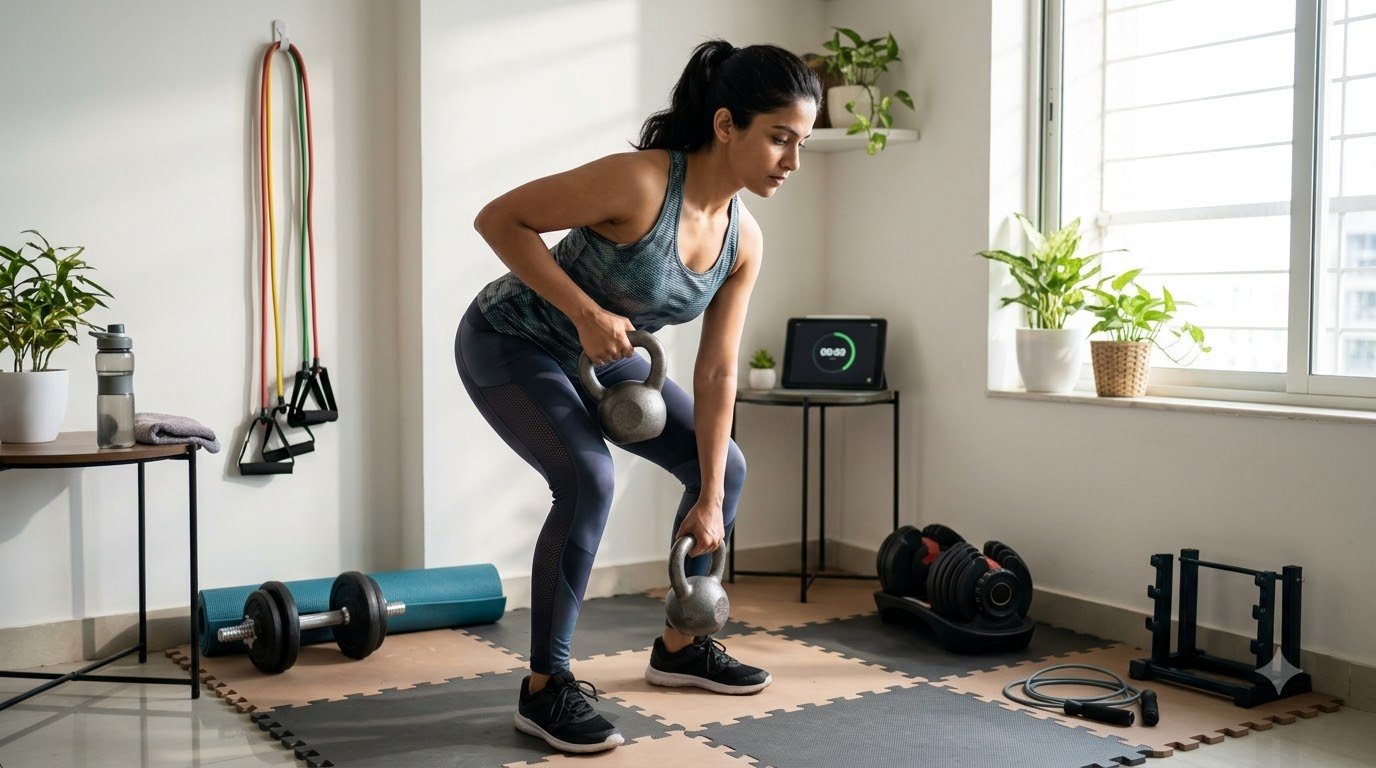
Choose one consistent area, even if it is just a mat in the living room or a corner of the bedroom. A fixed location reduces decision fatigue and makes starting the session automatic. Keep the space clear of clutter and put your phone on silent so distractions stay outside the workout.
2. Apply progressive overload every week
Your muscles only grow when the challenge keeps increasing. Add one or two reps, slow the lowering phase, shorten rest periods, or move to a harder variation once the current level feels manageable. Without this steady progression, home gym workouts quickly stop producing results.
3. Centre your sessions on compound movements
Squats, push-ups, rows, hip hinges, and overhead presses train multiple muscle groups at once and give the highest return on limited time. These movements also improve everyday strength and functional fitness. Build every workout around two to four of these patterns before adding isolation work.
4. Master strict form and control
When you train alone it is easy to rush or use momentum. Slow the eccentric (lowering) phase to three or four seconds and focus on feeling the target muscle work. Good form protects joints, maximises muscle activation, and makes every rep count toward real progress.
5. Combine strength and cardio elements
Strength training builds muscle and metabolism while cardio supports heart health and endurance. You can alternate strength days with cardio days or mix short circuits that raise your heart rate between sets. This balanced approach delivers better overall fitness than focusing on only one style.
6. Warm up thoroughly and cool down
Spend five to ten minutes on dynamic movements such as arm circles, bodyweight squats, and hip openers before the main work. A proper warm-up prepares joints and nervous system and lowers injury risk. Finish with light stretching or mobility drills to support recovery and maintain flexibility.
7. Protect recovery and stay consistent
Muscles grow during rest, not during the workout. Schedule at least one full rest day between hard sessions and prioritise sleep and protein intake. Showing up three or four times a week, even for shorter sessions, beats occasional marathon workouts that leave you drained.
8. Track every session and adjust smartly
Write down the exercises, sets, reps, and how you felt. When a target becomes easy, change only one variable at a time so progress stays measurable. Periodic lighter deload weeks every four to eight weeks prevent plateaus and keep motivation high.
9. Use simple equipment or smart bodyweight progressionsly
Resistance bands, a pair of adjustable dumbbells, or even a filled backpack are enough to keep progressing for years. When equipment is limited, advance bodyweight moves (knee push-ups to full push-ups to elevated feet) or slow the tempo. Progression is always possible with creativity.
10. Keep sessions time-efficient and enjoyable
Most effective home sessions last 30–45 minutes when focused on compounds and minimal rest. Choose exercises and formats you actually like so consistency becomes easier. Enjoyment and efficiency together turn home training into a sustainable habit rather than a chore.
Conclusion
Most effective home sessions last 30–45 minutes when focused on compounds and minimal rest. Choose exercises and formats you actually like so consistency becomes easier. Enjoyment and efficiency together turn home training into a sustainable habit rather than a chore.
These ten tips give you a clear, practical system for effective home gym workouts that produce measurable results. Progressive overload, compound movements, strict form, balanced training, and consistent recovery form the foundation. Apply them regularly and you will build strength, improve fitness, and create a routine that fits your life.
When you are ready to take your training further with expert coaching, specialised equipment, and a supportive community, visit One More Rep in Mangalore. Our certified trainers can help you refine form, design progressive programmes, and accelerate the results you have already started building at home.
Frequently Asked Questions (FAQs)
1. Can home gym workouts really build muscle and strength as effectively as a commercial gym?
Two to three sessions a week is enough for most people to see steady progress, as long as it’s kept consistent over months rather than done in short, intense bursts.
2. Is it normal to not see changes in the first few weeks?
Yes. Strength and body composition changes build up gradually. Most people notice a difference in energy and stamina before they notice visible change — that usually takes six to eight weeks of regular training.
3. What is the most important tip for making home gym workouts effective?
Progressive overload is the single most important principle. Gradually increase the difficulty (more reps, slower tempo, shorter rest, or harder variations) so your body is continually challenged. Without progression, results stall quickly.
4. Do I need a lot of equipment for effective home gym workouts?
No. A resistance band set, a pair of adjustable dumbbells, or even bodyweight progressions are enough for years of progress. Many people build impressive strength and fitness with minimal or no equipment by focusing on form and progressive overload.
5. How long should an effective home gym workout last?
Most productive sessions last 30–45 minutes when structured around compound movements and limited rest. Shorter, focused workouts done consistently outperform long, unfocused sessions.